Vegetable Gardening
The Damage Done


Little did I know when I was admiring this sphinx moth earlier in the spring of the year, that it would produce offspring that would turn into a monster worm that would try to decimate my tomato crop. I found three tomato hornworms in my tomato patch this morning, and much damage was already done.

White Lined Sphinx Moth
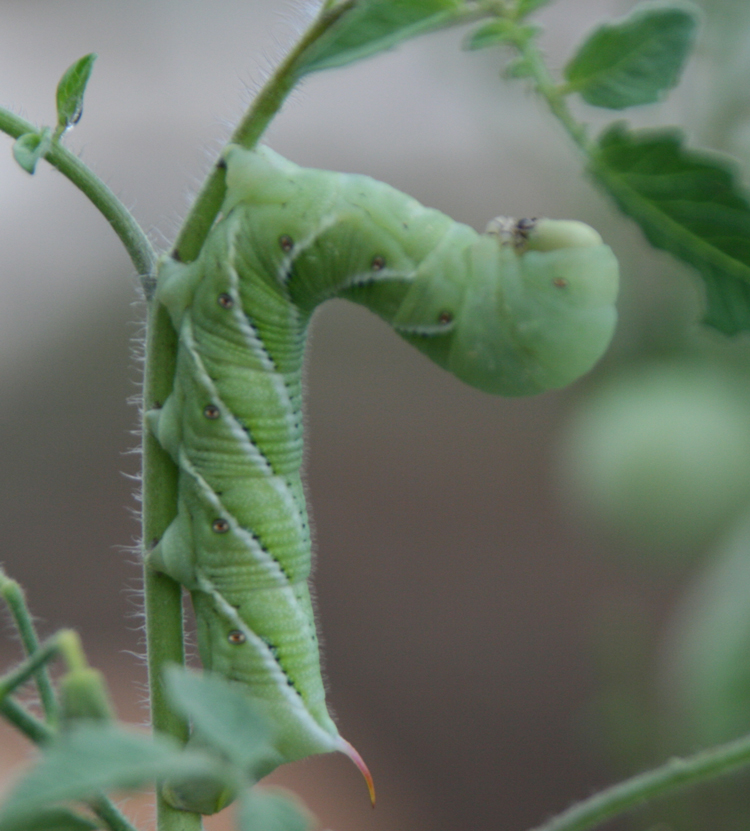
Tomato Hornworm
I am not certain that this moth was the precursor to the worm, but the U of MN web site image at the top of the page describing the hornworm looks alot like the same Sphinx moth that I photographed last spring.
And here is the sure sign that these worms have invaded your tomato patch.
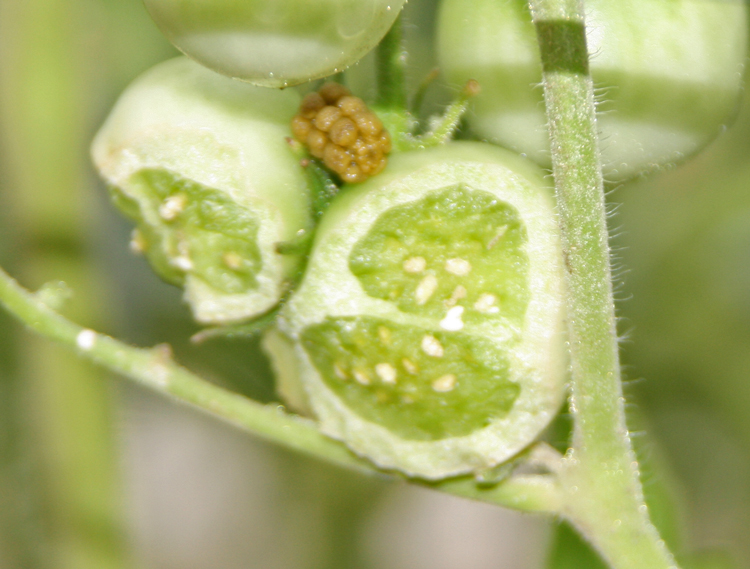
Tomato Hornworm Damage
After photographing the hornworms I left the executions to Ron, as I often do. I hate killing just about anything but ants, but these guys are eating my food, so it must be done.
Peace.
Carol
 Tags:
Tags: Discussion
Post a comment
Categories
- Blogging
- Butterfly
- Christmas
- cosmos
- CSA Farm
- flowers
- Gardening
- Greenhouse
- Hardscaping
- Holidays
- Homesteading
- Intensive Farming
- landscaping
- Lost Valley Gardens
- Native Plants
- Nature
- Organic Gardening
- Photography
- Plant Production
- Propagation
- Seed Starting
- Vegetable Gardening
- Vermont Bound
- Water Gardening
- Web Design
- winter


Yup, that’s definitely a tomato hornworm. I just found 3 tobacco hornworms on my datura and my neighbor vengefully stomped on them since his big crop is tomatoes (oh my god, the splatter pattern on the driveway was 2 feet wide…ugh).
I was feeling a moral dilemma about it since I, too, love the sphinx moths and datura is the preferred food plant for the tobacco hornworm, NOT the tomato (hornworms eat plants from the family Solanaceae, but tobacco worms prefer the poisonous ones), but I don’t think I’d have any problem with killing the tomato worm. I like my tomatoes too much!
But I wonder whether it would help at all to surround a tomato patch with plants from the nightshade family to act as an alternate food source, or whether that would just attract more worms?
Anyway, I’m sorry about your tomatoes. My tomato-growing neighbor suggested cutting the bottom off a gallon jug and burying at soil level and filling it with beer. Apparently the hornworms are attracted to that and they’ll climb in and drown.
Hey Lori- thanks for the ideas and tips. I will definitely try the beer method if I continue to have a problem with these guys. I still have a lot of tomatoes left, but I want to protect them from further munching. I wonder if BT will kill them.
I’ve read that the most effective control is handpicking, but Bt is effective while they’re still caterpillars.
And a bit of trivia for parties: Nature’s control method is parasitic wasps. They lay their eggs in the hornworm, and you can guess the gory details. It’s pretty gross. But I know there are places that sell parasitic wasps, so maybe that could be an option for the future.
Anyway, I know a guy who does fairly large-scale permaculture farming, so I’m going to shoot him an e-mail with some questions about hornworm control and see what he says. I’ll let you know if anything new comes up.
BTW, I read your comment about water usage over at Zanthan Gardens– HOLY CRAP. I feel better now about my water bill, that’s for sure.
I did a little reading up on control of hornworms also, and BT was mentioned, as well as parasitic wasps.
Re water bill – you know it is bad when you pay more for water per month than you do for electricity for cooling during the hottest months of the year. But it is the price we must pay if we want to keep our plants and trees alive during extreme drought conditions and 100+ degree temps every day.
Thanks again for sharing the info on hornworm control.
Man, those hornworms just irk me. And for being so big, I can’t believe how hard they are to spot. But you certainly see their destructive path before you see them.
Bonnie – you are so right about them being hard to spot even though they are huge. I first spotted the damage, and then had to hunt for quite a while before I located the culprits. Then I went to get my camera, and even though I knew pretty much where they were, I still had to hunt for them to find them. Nature is truly amazing.