It is really tricky getting cool weather fall crops started when the weather is 100+ every day, but the window of opportunity for the fall growing season is fleeting and many crops must be set out in the August/Sept timeframe in order to have time to produce. Heck, it is still so hot that the tomatoes and peppers that I planted in early July for late summer production are barely producing blooms much less fruit at this point even though they are under shade structures.
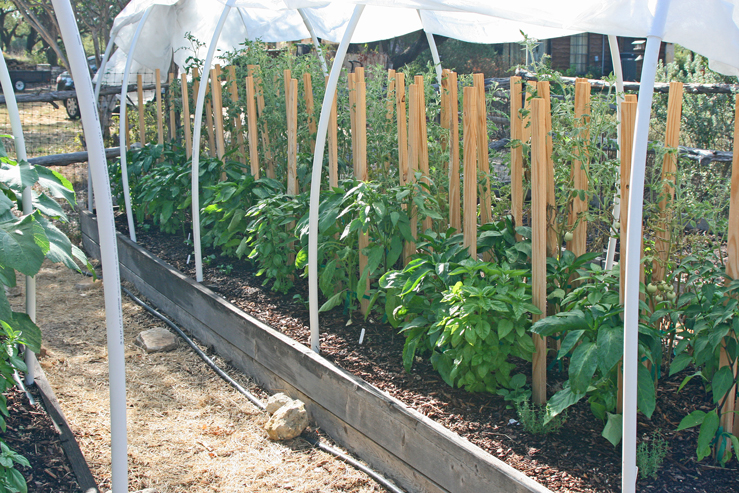
Pepper Plants for Late Summer Production
One way to deal with short growing seasons, or weather that won’t let you seed directly due to heat, cold, or wet, is to grow transplants in a greenhouse or sunroom and move them to the garden when the conditions are more favorable. This approach works quite well, but can be tough if your target planting window turns out to be too hot or cold (or wet if you live in Vermont or Oregon). Adding shade or thermal covering to the garden beds eases the shock for the transplants as well.
Our greenhouse was far too hot in August for managing transplants so I turned our front entryway into a mini greenhouse and have been growing hundreds of transplants for our fall crops there. We have been hardening them off to the heat and wind by setting them out in a tree-shaded area every morning from 7 until noon. At this point they are all looking good and are ready to be planted in the garden – more than ready actually, but this past week has been the hottest of the season so far so we have been waiting for the weather to moderate at least a little bit – say into the 90s instead of 100s.
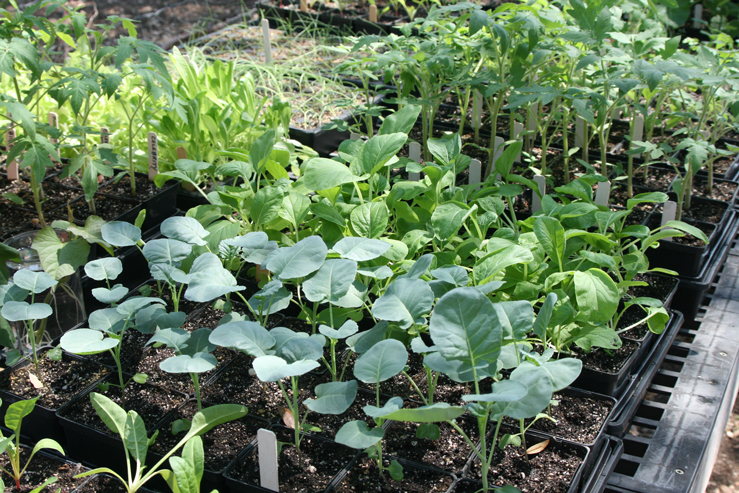
Broccoli Transplants
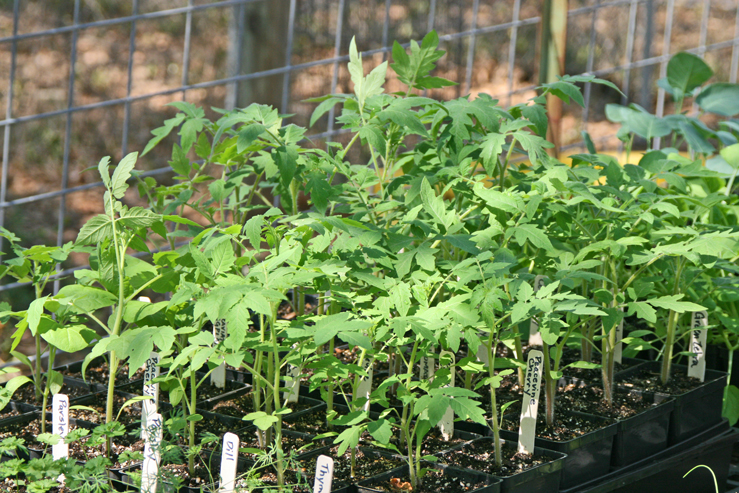
Tomato Transplants
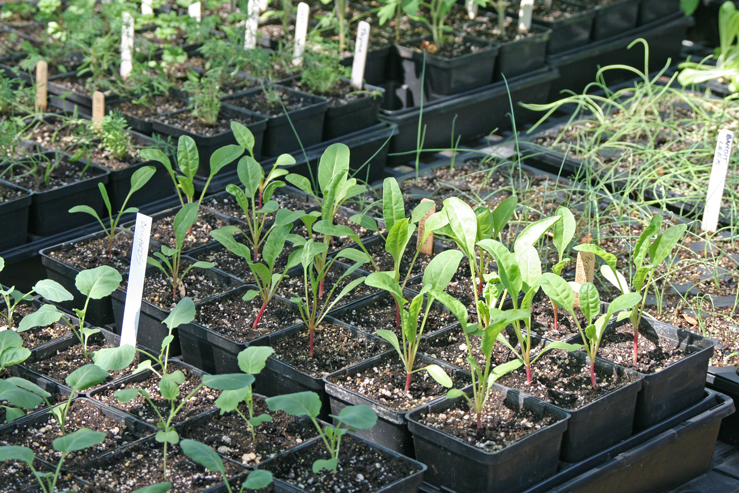
Chard Transplants
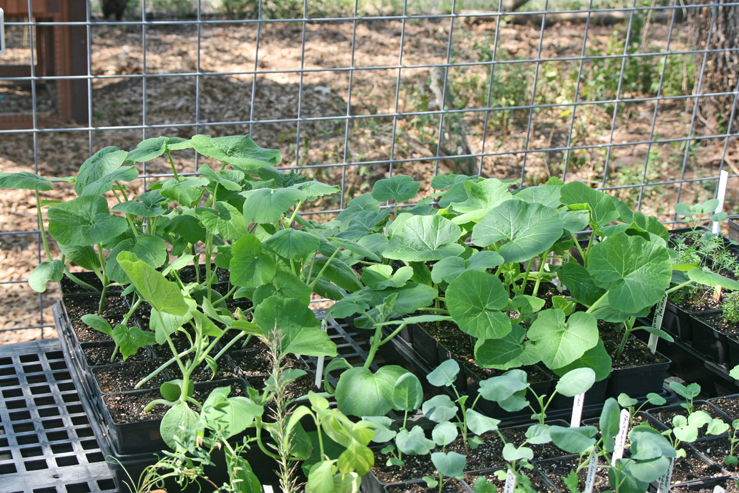
Pumpkin and Winter Squash Transplants
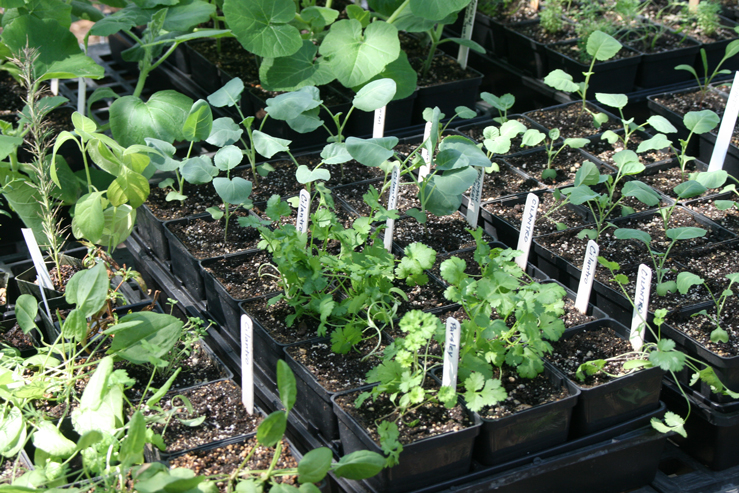
Herb Transplants
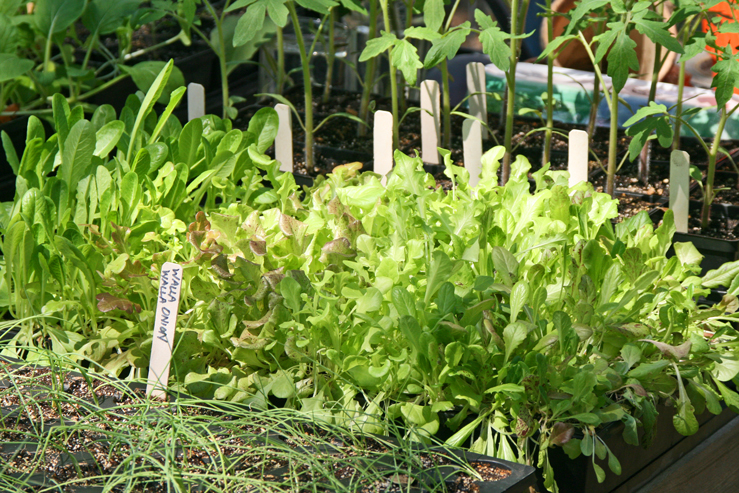
Lettuce Transplants
We have the garden beds prepared and the shade structures built.
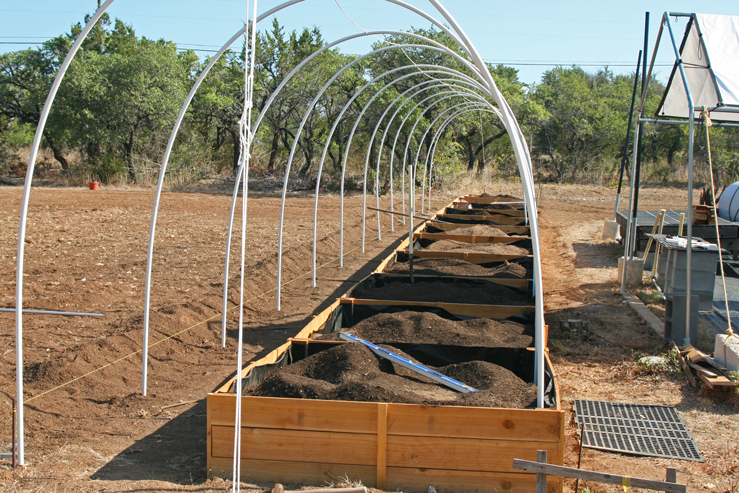
One West Area – First Bed
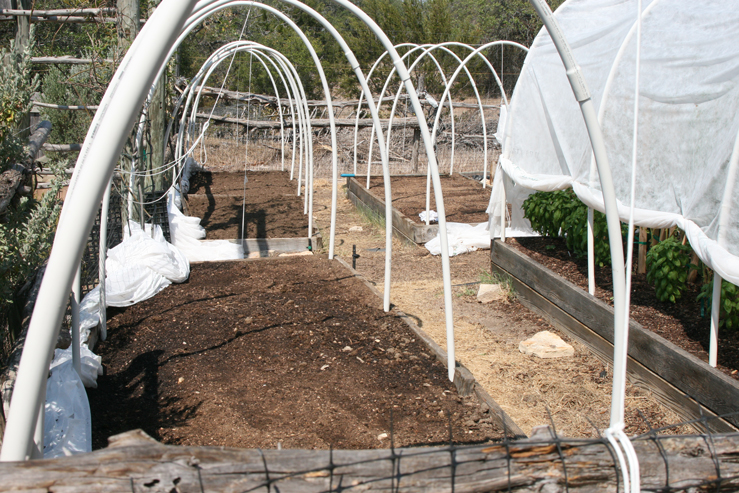
Market Garden Beds Ready for Planting
While we have been waiting for the weather to cool down – a little rain would be nice too – we have spent some time mapping the future locations for the transplants and direct seeded fall crops. For some strange reason this type of mapping task is quite enjoyable for me. It’s kind of like solving a puzzle in a way. I have a list of all the crops that we plan to grow for late summer, fall and winter, and I have diagrams of all of the planting areas and beds. The problem that has to be solved is to find the best location for each crop, taking crop rotation, companion planting, sun and wind exposure, and other factors into consideration. Below are the current planting diagrams for the beds we have built out.
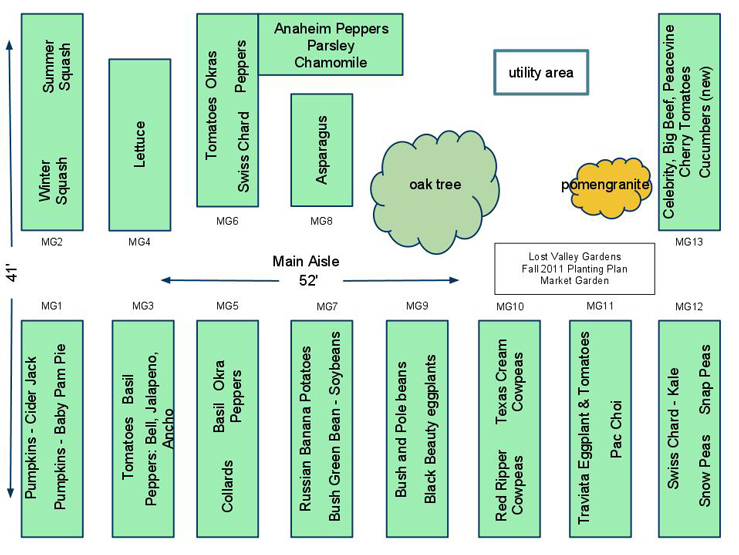
Market Garden Fall 2011 Planting Plan
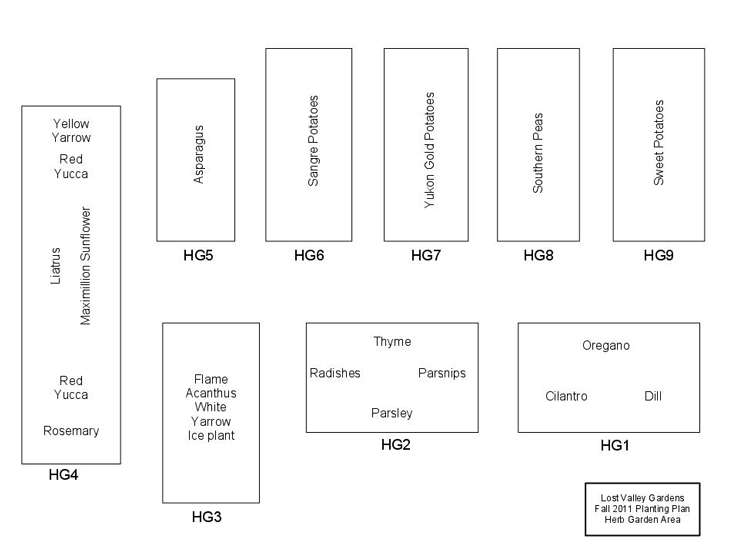
Herb Garden Fall 2011 Planting Plan
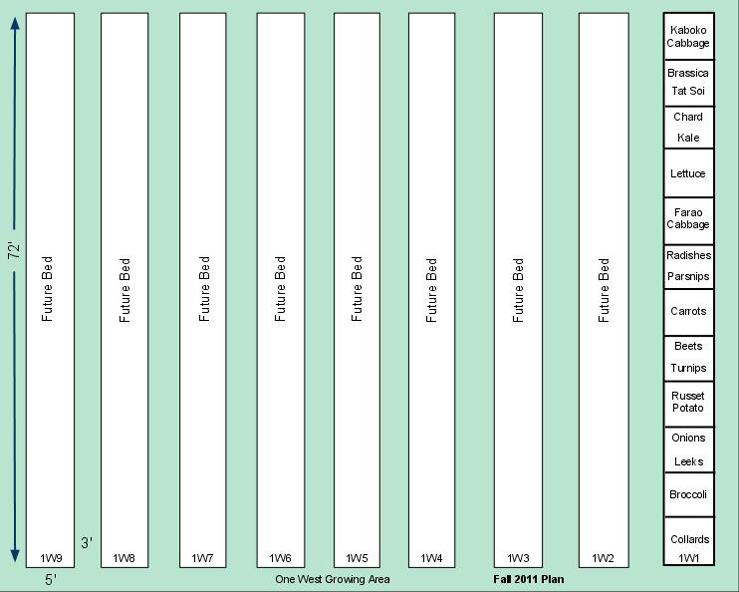
One West Area Fall 2011 Planting Plan
Come what may, this weekend the wait will be over. We will be planting all of our transplants and direct seeding many crops. We simply can’t wait any longer or we will miss our window of opportunity. Of course, as insurance, I will be starting lots of new winter transplants next week!
Update, Sept 7: Well, what came our way was a fire. Luckily it did not get any closer than about 15 miles north of us, but on Monday (Labor Day) there was smoke all over our valley. Scary.
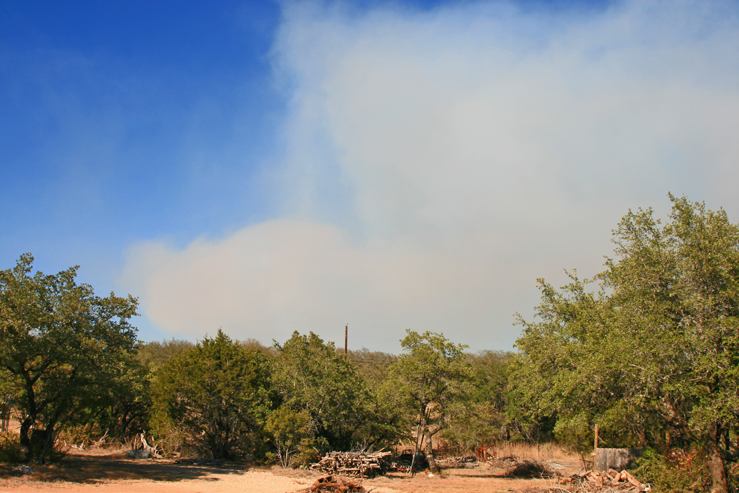
Smoke From the Spicewood Fire As Seen From Our Farm on Sept. 5, 2011