I knew farming in Central Texas was going to be challenging. Heat and drought tolerant plant varieties are a must for spring and summer crops. Raised beds and well conditioned garden soil help in dealing with the highly alkaline, caliche filled soil that is predominant in the hill country. Collecting rain water for irrigation rather than using our hard and alkaline well water also ensures healthier vegetable plants and better production (as long as there is some rain every once in a while to fill the tank). Using drip irrigation, mulching heavily and tenting beds with shade cloth for shading in the heat of the day are all techniques and methods that we employ to ensure successful production in this rather hostile farming environment. Under “normal” Central Texas spring and summer conditions the measures described are adequate to meet the climate, soil and water challenges that are part of farming and gardening here, but this year has not been normal thus far.
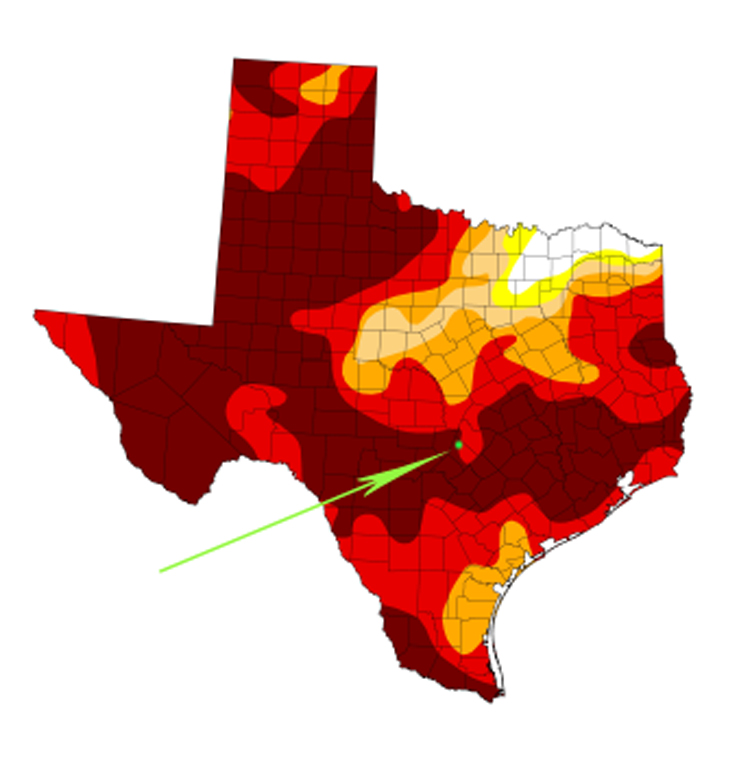
US Drought Monitor – Texas; May 31, 2011
As shown in the US Drought Monitor map for Texas [1], much of the state of Texas, including our location depicted by the green dot, is in a state of exceptional drought. Even more concerning is Jim Spencer’s summer forecast [2] for our area. As Jim points out, we have already had five days (today makes six) of 100+ temps this spring and have broken high temp records 7 out of the last 13 days. He goes on to say:
What’s causing it? It’s actually very simple. It’s the drought. We are experiencing our hottest spring on record because Texas has just experienced its driest spring on record. When there is soil moisture, and greener vegetation, heat is absorbed through the evaporation process. When there is none, the heat is simply reflected. And, when there is no soil moisture, there is less atmospheric moisture for potential rain development. It’s a vicious cycle–a feedback loop.
So, unless something happens to disrupt this current weather pattern, something like a hurricane or tropical storm in the Gulf of Mexico, we may be in for the hottest, driest summer ever here in Central Texas.
Given that we are in uncharted territory with regard to farming in this sort of climate, I do not know what to expect as the summer wears on. There is only so much water that can be applied and shade that can be provided. However, so far, we have been able to keep production on track, albeit a bit slower than would have been the case with some rain and more moderate temperatures.
The harvest this morning included yellow squash, plum, grape and cherry tomatoes, a couple of peppers, tomatillos, basil, and lots of chard along with eggs from the chickens.
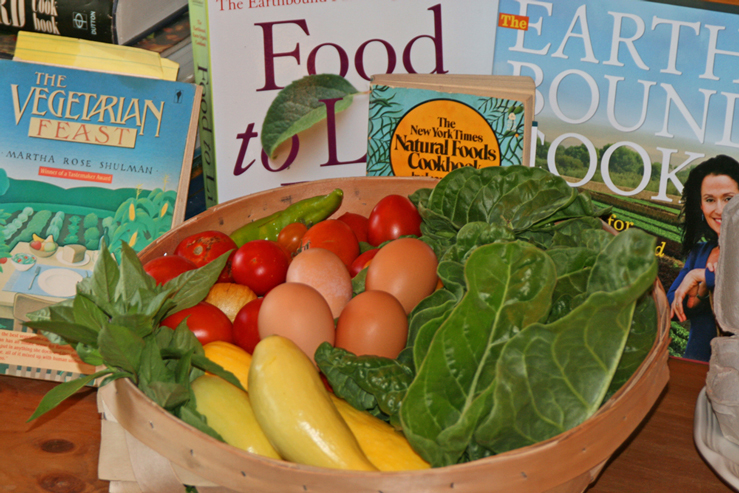
June 7 Harvest from the Market Garden
The melons, squash and cucumbers are full of blooms, bees and fruits of varying size.
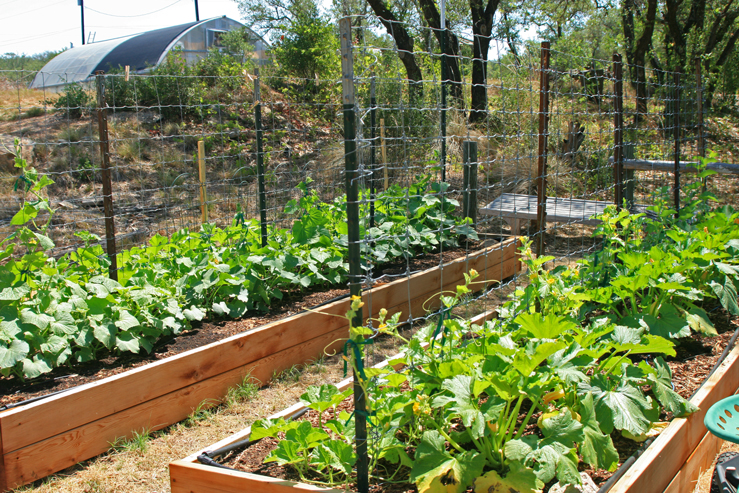
Zucchini, Ambrosia Melons, Cucumbers, and Yellow Squash
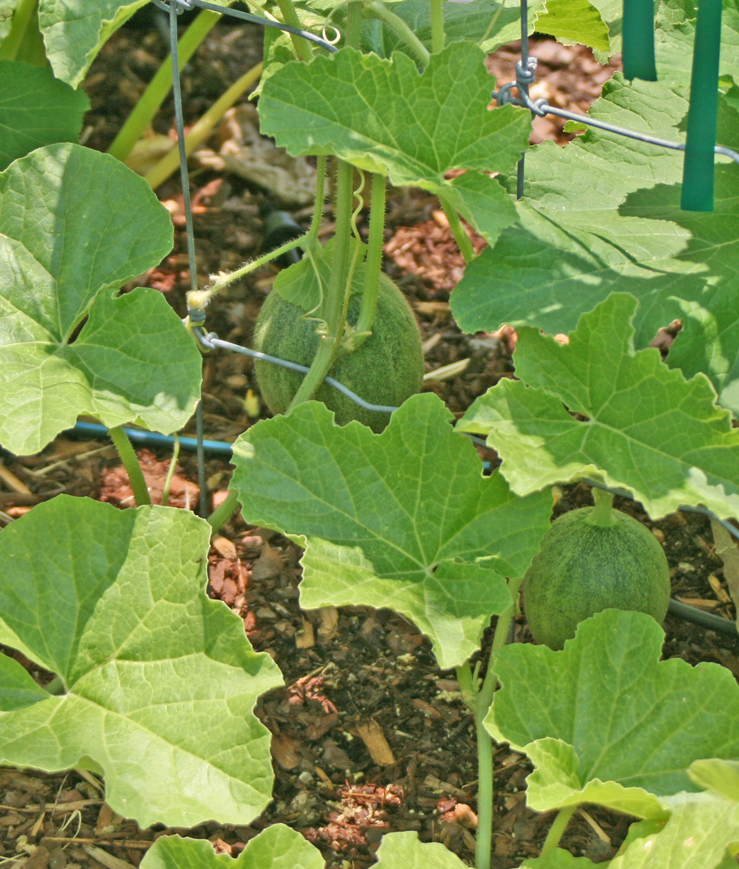
Ambrosia Melons
All of the Black Beauty eggplants are setting lovely fruits now.
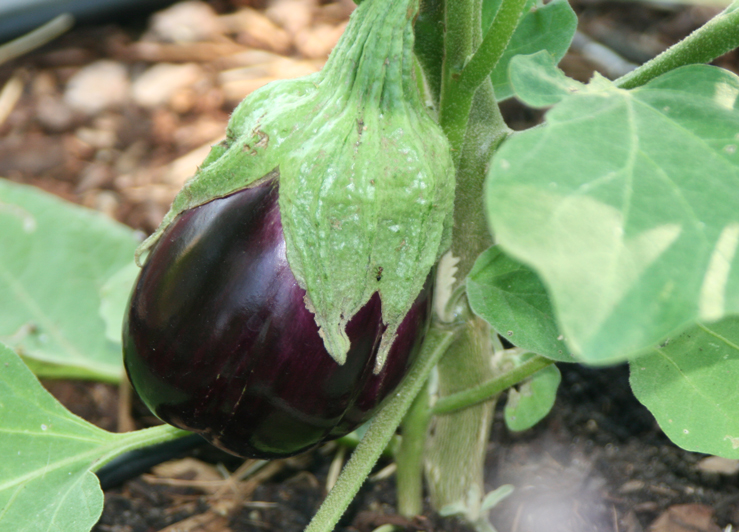
Young Black Beauty Eggplant
Meanwhile, in the new double-dug beds in the herb garden, the bed that was planted on May 2 is doing fantastically. It is so lush that all of the soil is well shaded and stays moist with only a light morning and evening watering each day. I am worried, however, that the lack of air circulation may lead to pests and disease, but that has not been the case yet.
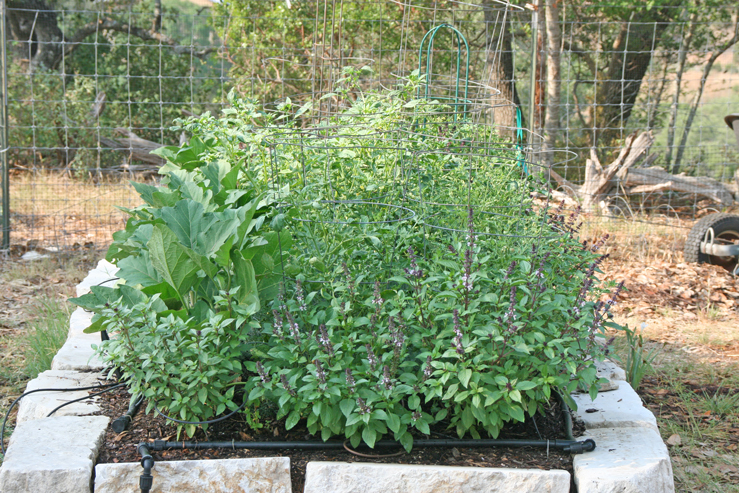
Double-Dug Raised Bed One Month After Planting
I also finished double-digging a second bed in the herb garden area in which we installed a trellis and planted cow peas, pole beans and squash, all of which sprouted in just days. This growing area is in full sun all day so I decided to provide shade tents for these beds in the afternoon. I am hoping that the light shade will be enough to keep these plants from frying. Time will tell.
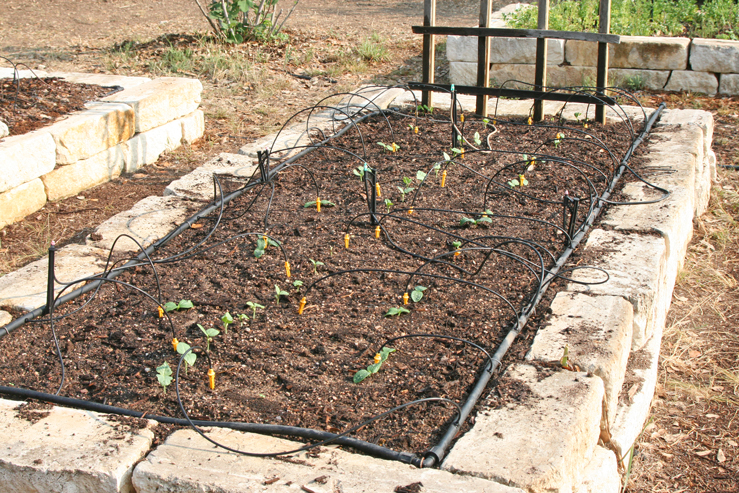
Double-Dug Raised Bed with Newly Sprouted Seedlings
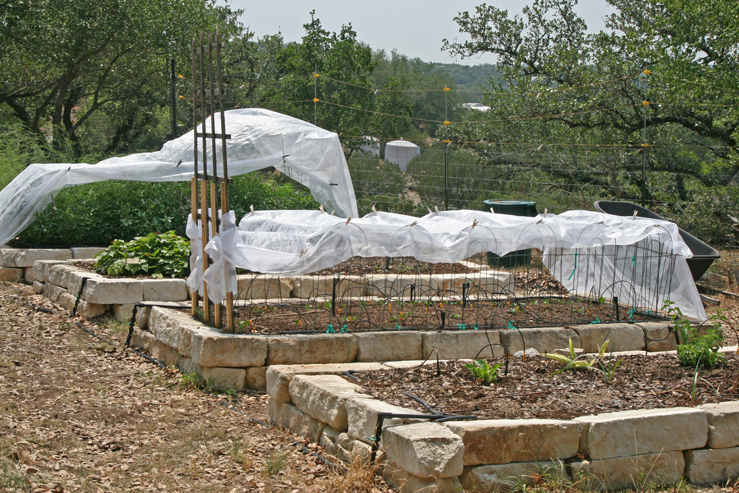
Shaded Double-Dug Raised Beds
We will continue to try to meet the ever-evolving challenges of farming here as long as we can sustain the effort. After all, Central Texans need fresh vegetables as much as everyone else does.
Stay cool and do a rain dance.
Carol
Update June 09: Looks like we aren’t the only farm in town that is feeling a bit challenged.